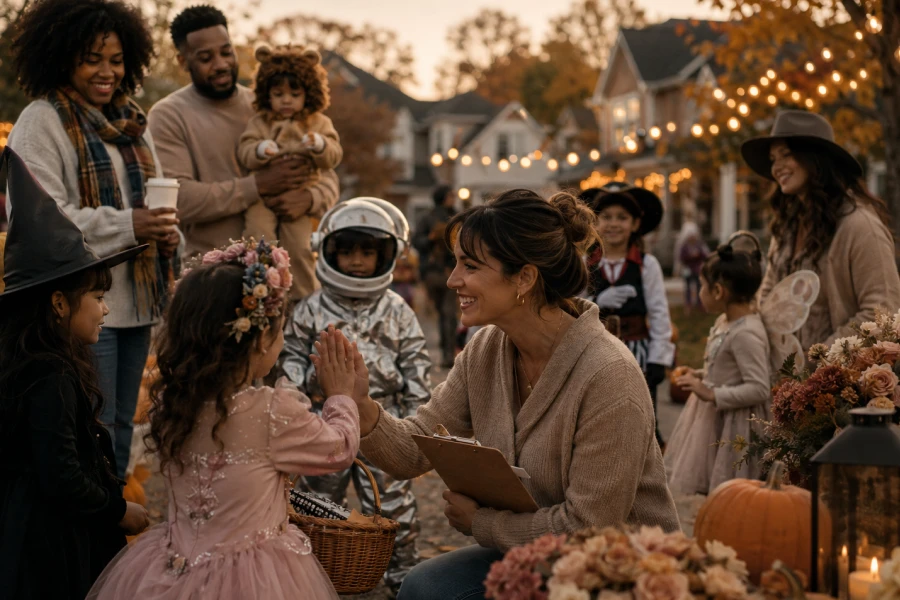
A neighborhood costume contest works best when it feels simple, social, and easy to join. People want fun, but they also want clear rules. Families need timing that works around dinner, trick-or-treating, and school nights. Adults need a reason to participate without feeling awkward. Kids need categories that feel fair. Pets need their own spotlight if the community loves them. A strong contest creates a shared moment. It gives neighbors something to photograph, remember, and talk about later. The right plan keeps the mood playful instead of chaotic. That is where thoughtful structure makes the whole event feel effortless.
Energy shapes how people remember the entire event. A contest can feel exciting without becoming loud or overwhelming. Start by choosing one central gathering spot. Keep the entrance visible. Make check-in quick. Use simple signage if needed. Avoid confusing instructions. A clear welcome helps shy guests join faster. A short opening moment also builds anticipation. For organizers who want a smoother approach, community event planning can make every choice feel more intentional.
Judging should feel light, transparent, and friendly. Nobody wants a neighborhood event to feel overly competitive. Choose judges before the event begins. Give them simple criteria. Keep the categories broad enough for creativity. Use fun awards beyond first place. Include funniest, most creative, best handmade, and best group costume. This approach protects the mood. It also gives more guests a chance to shine. If you need stronger structure, costume judging ideas can help you build a fair system.
Timing decides whether people arrive relaxed or rushed. Keep the contest short enough for families with young children. Start with a casual arrival window. Follow with photos. Move into judging before attention fades. Announce winners quickly. Leave room afterward for snacks, visiting, and pictures. A strong timeline prevents awkward waiting. It also helps volunteers know what happens next. When the schedule supports real life, the event feels polished without feeling stiff.
Participation grows when the rules feel welcoming. Let guests enter as individuals, couples, families, or groups. Offer a simple way to register at arrival. Avoid long forms. Keep costume requirements flexible. Allow store-bought, handmade, funny, spooky, or cozy looks. Include a no-pressure photo area. Make it clear that spectators are welcome too. This removes social friction. For a wider turnout, family-friendly contest setup can help every guest feel included.
Categories should be easy to understand at a glance. Complicated awards slow everything down. Choose names that make people smile. Best DIY Costume feels clear. Funniest Costume feels playful. Best Family Theme invites group creativity. Best Pet Costume adds charm if pets are allowed. Most Creative Costume rewards imagination. Keep the number of categories manageable. Too many awards can weaken the big moment. A focused list keeps attention strong and announcements lively.
The event does not end when the prizes are handed out. Follow-up keeps the community feeling connected. Share a thank-you message the next day. Mention volunteers by name if appropriate. Post a few approved photos in a neighborhood group. Ask for feedback while the event is still fresh. Save category ideas for next year. Note what worked. Note what felt rushed. A strong follow-up turns one festive night into a tradition people expect.


Leave a comment